
Many hockey seasons are coming to a close, and attention is shifting toward off-season training.
Some athletes already have a structured plan. Others go into summer without direction. Most fall somewhere in between.
The reality is this:
Your off-season determines how you show up next season.
A well-executed off-season will have you returning to the ice stronger, faster, more resilient, and better prepared for the demands of hockey. But that doesn’t happen by accident. It starts with a plan.
If you’re an athlete in Orange County, California, looking to maximize your off-season, use this checklist to guide your training.
1. Focus on the Foundation
Every effective off-season starts with three non-negotiables:
- Hydration
- Nutrition
- Sleep
No amount of recovery tools—compression boots, massage guns, red light therapy—will compensate for poor habits here.
Be intentional:
- Eat enough protein to support muscle development
- Fuel with complex carbohydrates and healthy fats
- Aim for 8+ hours of sleep each night
- Stay hydrated and incorporate electrolytes when needed
If these aren’t dialed in, everything else falls short.
2. Take a True Rest Period
When the season ends, your body and nervous system need a reset.
This isn’t optional—it’s strategic.
Step away from structured training briefly to:
- Recover from accumulated fatigue
- Reduce injury risk
- Break repetitive movement patterns
That doesn’t mean doing nothing. Stay active with low-intensity movement:
- Hiking
- Biking
- Swimming
- Mobility work
A short reset creates a much higher ceiling for performance later in the off-season.
3. Train With a Structured Plan
This is where most athletes go wrong.
Random workouts produce random results.
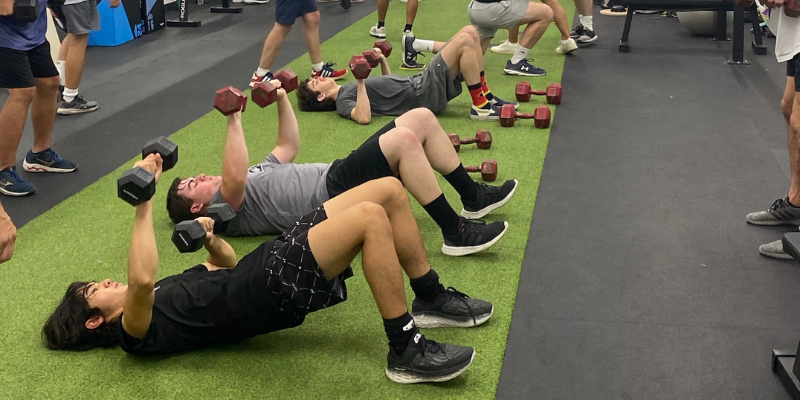
At Compete Sports Performance & Rehab, off-season training is structured into phases:
- Recovery and regeneration
- Strength development
- Power and explosiveness
- Conditioning and return-to-sport integration
Each phase builds on the last.
If you’re not following a system like this, you’re leaving performance on the table.
4. Chase Athleticism, Not Aesthetics
Hockey isn’t about how you look—it’s about how you perform.
Your training should prioritize:
- Strength
- Power
- Speed
- Agility
- Balance
If your workouts don’t translate to the ice, they’re not serving you.
Train like an athlete, not a bodybuilder.
5. Prioritize Mobility and Stability
This is the most overlooked piece—and often the difference between staying healthy or getting injured.
During the season, these areas are usually neglected.
The off-season is your opportunity to:
- Improve joint mobility
- Build single-leg strength and stability
- Address imbalances
- Commit to consistent prehab work
Better movement = better performance.
6. Start Now (Not in June)
Here’s the mistake most athletes make:
They wait.
By the time they “get serious,” they’ve already lost weeks of progress.
The off-season doesn’t start when it’s convenient.
It starts the moment your season ends.
Train With a Purpose This Off-Season
If you want to return next season:
- Stronger
- Faster
- More explosive
- More resilient
You need more than a checklist. You need a system.
Compete Sports Performance & Rehab offers:
- In-person sports performance training in Orange County
- Remote training programs for athletes anywhere
- Individualized plans based on your sport, position, and goals
Stop guessing your way through the off-season.
Start training with a plan built for performance.